

Over the years, we’ve interacted with several leaders in the engineering industry. They all agreed on one common idea—scaling sustainable engineering today is not just about building smarter machines, but smarter ecosystems powered by data integration, workflow automation, and a Single Source of Truth (SSOT) on platforms like Salesforce. As these leaders unified IoT-powered data, sustainability insights, and analytics, they unlocked better impact measurement and efficiency.
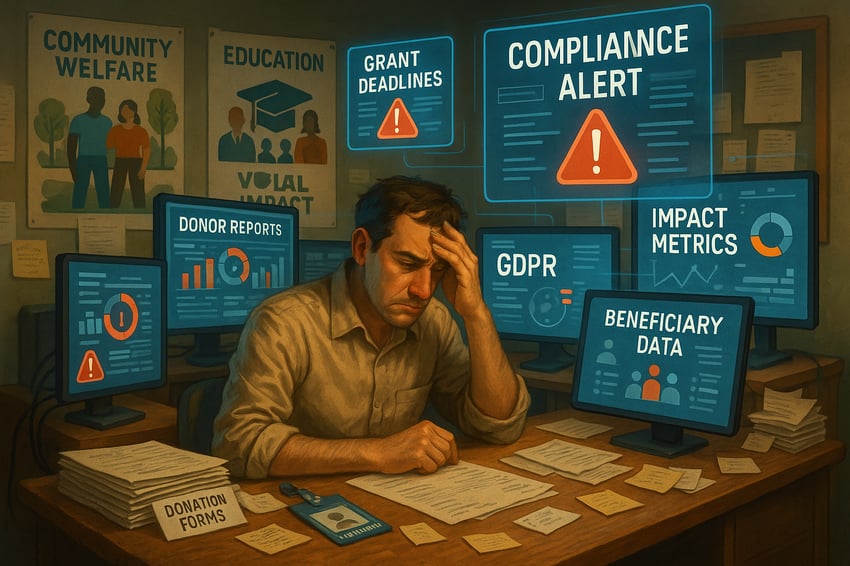
However, the story is very different for charities and non-profits. In a survey, it was found that 22% of nonprofits have no budget for IT, and over 50% lack a digital transformation strategy, limiting their ability to scale. Many struggle with donor management, cybersecurity, and fragmented systems, despite solutions like Salesforce Nonprofit Cloud. This “charity tech paradox” continues to widen the gap, raising a critical question—why do nonprofits struggle to adopt the very technologies that could amplify their impact? Let’s find out.
Key Takeaways
|
Why Charities/ Non-profits Struggle With Technology Adoption?
Having worked with many Charities/ Non-profits for several years now, we’ve observed something unique to the industry - The core issue related to technology adoption isn’t resistance to impact, it’s resistance to infrastructure. Here are 4 reasons why Charities/ Non-profits of today struggle with technology adoption: 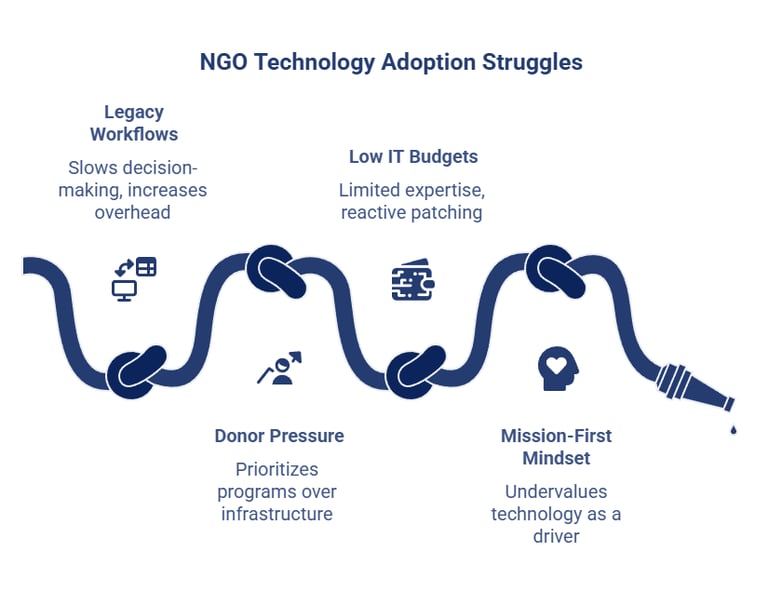
1. Legacy Workflows That Don’t Scale
Most Charities/ Non-profits rely on systems designed for a pre-digital world. You will see them using spreadsheets, paper-based records, siloed databases, and manual reporting processes, rampantly. These legacy workflows were sufficient when operations were much smaller and a couple of decades ago. But they now slow down decision-making and increase administrative overhead. This makes compliance reporting painful and traps Charities/ Non-profits in inefficiency.
2. Donor Pressure to Prioritise Programs Over Infrastructure
Donors, while well-intentioned, often worsen the paradox by insisting their funds be directed toward visible program work rather than digital infrastructure. This creates an environment where Charities/ Non-profits feel penalised for investing in technology. This is despite them knowing that such investments would reduce costs and improve outcomes in the long run.
3. Low IT Budgets and Limited Technical Expertise
With restricted funding allocations and an acute talent shortage, many Charities/ Non-profits simply don’t have in-house expertise to deploy or maintain modern platforms. Staff members are forced to juggle multiple roles. Technology becomes an afterthought rather than a strategic priority. Without structured digital roadmaps, nonprofits continue to patch systems reactively. They end up solving today’s problems without building tomorrow's capabilities.
4. Mission-First Mindset but Tech-Second Capability
Many nonprofit teams are deeply committed to their cause. But their organisational culture often undervalues technology as a driver of mission success. The belief that “impact happens in the field, not the server room” creates a disconnect. A disconnect where digital transformation is perceived as administrative overhead instead of a force multiplier. Bridging this cultural gap requires reframing technology from a cost centre into a core component of service delivery.
Core Tech Challenges Charities/ Non-profits Will Face in 2026
Today’s Charities/ Non-profits encounter a new generation of digital obstacles. These challenges affect their credibility and ability to fulfil their mission. Below are the four most pressing technology hurdles nonprofits must overcome in 2026 and how to solve them:
Challenge #1: Fragmented Systems and Data Silos
Most nonprofits today run critical operations across multiple disconnected tools. A grants management system here, a donor CRM there, and a project management software somewhere else. While each system individually serves a purpose, together they form isolated islands of data.
The lack of integration leads to:
- Inconsistent reporting
- Duplicate data entry
- Manual reconciliation
- Limited visibility into impact metrics.
For Charities/ Non-profits wanting to prove every pound’s effectiveness, this turns into an administrative nightmare. Instead of focusing on delivering impact, staff are forced into being data detectives.
Solution: Adopt an integrated CRM plus data cloud strategy. By centralising donor and financial data into a unified platform, you can create a single source of truth. This not only improves governance and reporting accuracy but also gives you real-time visibility into mission delivery.
Challenge #2: Manual Donor & Grant Management
Raising funds is a critical aspect impacting a nonprofit’s sustainability. Yet many organisations manage donor engagement and grant cycles on spreadsheets and emails.
Reporting cycles that should take hours frequently stretch into weeks. Donor relationships become transactional instead of personal. This is all because staff don’t have the insights or time to tailor communication. The result: missed renewal opportunities and donor fatigue.
Solution: Adopt a mission-centric digital transformation blueprint that begins with identifying high-friction workflows and digitising them end-to-end. Use workflow engines and AI assistants to automate onboarding, case management, verification steps, and program milestone tracking.
Challenge #3: Cybersecurity and Data Privacy
The myth that nonprofits are too small to be targeted is officially outdated. With valuable donor information and financial data in play, Charities/ Non-profits have become prime targets for cybercriminals.
A single breach can compromise donor trust and expose vulnerable communities. It can even lead to regulatory penalties. Meanwhile, compliance obligations continue to multiply, from GDPR and IRS reporting rules to emerging digital-identity laws in multiple regions. Put simply, today’s Charities/ Non-profits are expected to secure data at enterprise-grade levels without enterprise-level budgets.
Solution: Adopt a security-first architecture. Focus on role-based access, zero-trust controls, encryption standards, and compliance frameworks. This will reduce exposure dramatically. Instead of treating cybersecurity as a defensive afterthought, you must integrate it into your operating model.
Challenge #4: Low User Adoption and Change Fatigue
Even when Charities/ Non-profits invest in new systems, those systems often sit underused. Technology alone doesn’t transform organisations. People do.
Staff are stretched thin, juggling multiple responsibilities with minimal technical support. Introducing new tools without proper onboarding leads to frustration and inconsistent use. In many Charities/ Non-profits, digital initiatives fail not because the platform is wrong, but because the adoption approach is.
Solution: Combine digital adoption tools with a structured change management strategy. Guided workflows and nudges ensure users learn while they work, reducing training burden and accelerating time-to-value. When employees feel supported, not disrupted, technology becomes an enabler rather than another burden.
Solution: A Unified Digital Backbone using Salesforce
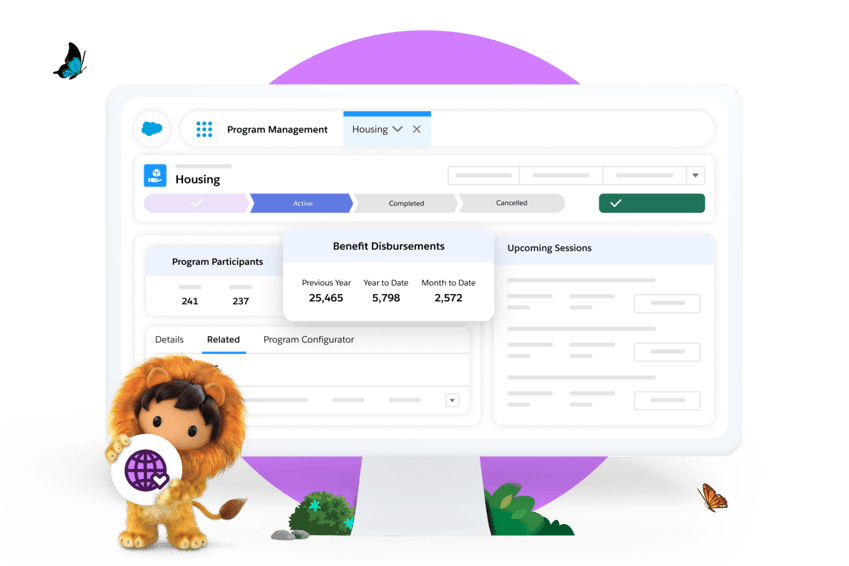 The path to scaling impact in the non-profit sector revolves around building a connected ecosystem. One where automation, CRM, reporting, and compliant workflows work together seamlessly. This kind of infrastructure brings three major advantages:
- Scales impact through transparency and data-driven reporting
- Streamlines operations via automation
- Builds digital trust with donors, governments, and communities by ensuring accountability and consistent compliance.
When your systems talk to each other, you eliminate duplication and accelerate grant and donor workflows. This, in turn, enables smarter decisions and stronger stakeholder confidence.
One solution that can help you build such an infrastructure is Salesforce Nonprofit Cloud. Built atop the robust Salesforce platform, it replaces fragmented tools with a unified CRM that handles everything from fundraising and donor management to program delivery, volunteer management, grants, and impact measurement. Its pre-built nonprofit data model and compliant data handling help address the four core challenges Charities/ Non-profits of today face, making it easier than ever to turn mission ambition into measurable, transparent results.
Check out this case study on how Brysa helped HSF Health Plan optimise their Salesforce setup, streamline workflows and expand into a new geography.
Next Steps: Build a Future-Ready Digital Charity/ NPO with Salesforce & Brysa
With Salesforce Nonprofit Cloud providing the digital foundation, the next critical step is implementation and user adoption. This is where Brysa comes in. As a leading Salesforce consultant with deep nonprofit expertise, we help Charities/ Non-profits like you translate technology into tangible mission outcomes through our consulting services and implementation services. From designing compliant data architectures and automating donor workflows to integrating legacy systems and enabling staff through guided onboarding, we ensure your digital ecosystem doesn’t just exist, it performs. Want to know more about us? Get in touch today.