

Welcome to Business Insights Journal, Satish. We’re delighted to have you. To begin, can you share your professional journey and what inspired you to launch Brysa?
I trained as an engineer and moved into media, with time in banking and engineering along the way. Running Salesforce on the client side during an acquisition exposed a simple truth: projects are meaningless unless they change how people work. Data only matters when it shifts behaviour.
Brysa grew from that idea rather than a leap of faith. I had seen how services could be run with more rigour, clear ownership and strong change leadership, so I built a team that turns signals into concrete next steps in Salesforce and Slack. Our culture follows the same line: client success first, outcomes over activity and a steady learning habit across Data Cloud, Agentforce and applied AI.
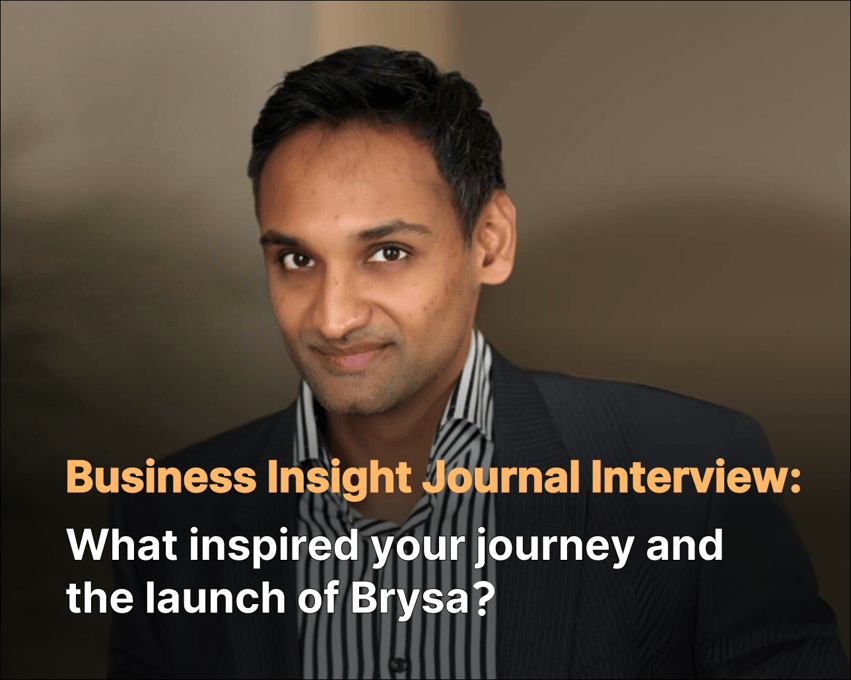
“We exist to help our clients succeed. Because if and only if they are successful, we are successful.” — Satish Thiagarajan
Many media companies over-invest in customer acquisition but overlook loyalty. From your perspective, why is retention such a persistent blind spot in the media industry?
Winning new business is easy to shout about. Keeping it is harder because retention cuts across teams. Too many publishers polish the pitch, then let clients drift once the campaign starts. The root cause is basic: systems don’t join up, no one owns the handoffs, and reports don’t change what people do. Treat retention like an operating system. Write a short list of decisions you will change, name the owner and review rhythm, agree the margin of error you can live with, use one shared customer view, and send the next step straight into the tools people already use. When you do that, leaders can see relationship health and service levels at a glance and move time and support before value leaks.
The blind spot appears after the first sale. Contact becomes generic and infrequent, and follow-through fades. Competitors who stay close win the next brief. The fix is simple discipline: a clear onboarding, proactive updates, and in-context recommendations that show progress while the campaign is live, not weeks later.
You’ve mentioned that attitude, communication, and customer expectations play a major role in retention. What are the most common mindset or communication mistakes media companies make that drive clients away?
Three patterns crop up time and again:
First, unclear intent. Leaders ask for more dashboards instead of saying which decision they will change and what margin of error they can accept. That creates activity without outcomes. Fix it with a short list of decisions to change and a named owner for each.
Second, shaky foundations. Systems don’t talk to each other and teams use different definitions, so people argue about the past and freeze on the future. Fix it by agreeing one shared set of customer and product IDs and one set of definitions. Do it early to speed up value.
Third, no ownership of data quality. If no one owns whether data is complete, current, unique or accurate, trust dies a little with every weekly report. Set simple quality checks, watch them and make someone responsible for fixing issues when they appear.
Then match the communication to the model. Clients leave when contact after the sale is generic and infrequent. Teams that send useful, timely updates, show results while the campaign is live and make it easy to shift budget keep loyalty.
With rising pressure and tighter budgets in the media landscape, why is it more critical than ever for companies to prioritize retention instead of living campaign to campaign?
With tighter budgets, hopping from one campaign to the next wastes time and money. New wins leak value if you don’t keep an eye on the relationship and the service the client is getting. The quicker route is to spot which accounts will stay and grow, then shift your team’s time to them. We’ve built simple relationship views on top of email and Salesforce activity so leaders can move support in days, not quarters. One national media owner doubled relationship-led sales in three months once those basics were in place.
Treat retention as a system, not a slogan. When everyone uses the same customer identity and definitions, and the next step shows up in the tools people already use, the waste drops away and results build faster than any burst of new acquisition.
How can personalization—through data, recommendations, and Dynamic Creative Optimization—be leveraged to create stronger loyalty and long-term value for media clients?
Spray-and-pray marketing is over. People have context and choice, so they ignore generic messages. When you tailor the timing and content to what someone is actually doing, engagement goes up and churn goes down because you respect their time. Brands that match message to behaviour earn loyalty. Those that blast everyone lose it.
For media owners this is practical. In retail media, for example, we combined till sales data (EPOS) with number plate data for store visits (ANPR) by location and time of day. We turned that into simple scores that showed which stores and time windows were worth backing. We put those scores in Salesforce for planning and in Slack during live campaigns. Planners could pick the right stores and slots, swap out weak ones mid-flight and then prove results with a post-campaign readout tied to the SKUs they promoted. Budgets moved to the high-return inventory, fill and yield improved and renewals followed.
Advertisers want the same things across categories: a connected experience, transparent delivery and data they can trust. Publishers that join their data up and engage in context keep clients longer because they make cause and effect easy to see.
Predictive insights are becoming essential for modern retention strategies. What kind of predictive data should media companies pay attention to, and how can it help them act before a customer churns?
Predictive only earns its keep when it is tight, timely and drives action. In media that means a small set of signals that point to a clear next step, not a new report to read.
First, spot churn early. Think of “renewal risk” as a simple check on delivery and engagement. Are campaigns pacing on plan, are attention or viewability targets being met, are there make-goods piling up, are tickets stuck, are we speaking to the right client stakeholders? Turn those answers into a short, owned task list in Salesforce or Slack so the AE, ad ops and CS team know exactly what to do and when. If risk rises, bring a senior sponsor into the next call while the campaign is still live.
Second, get paid on time by fixing issues before asking for cash. Watch invoice ageing beside disputed lines and open campaign problems. If delivery or brand safety is in question, resolve that first, then make the collections call with the right context. Timing and tone improve daily sales outstandings and cut write-offs because the ask matches the reality of the campaign.
Third, keep service promises by planning with facts, not hope. For digital, track creative QA turnaround, trafficking lead times, change-request queues and incident fixes. For OOH and retail media, track screen uptime, known faults, engineer skills and proximity, spares and site access. Push a daily plan into Slack and reflect updates in Salesforce or Field Service so the right person tackles the right job first. First-time fix rises and breaches fall when the plan is clear.
The thread is simple: define the signal, route the work, measure the lift. Predictive without workflow is decoration.
There are countless tools in the market, but not all deliver on personalization. What key capabilities should media companies look for when selecting tools that genuinely move the needle for customer retention?
There are too many tools. Pick ones that help your team decide and act, not just report. You need one clean customer list, one clear set of product and revenue definitions, and basic checks that data is complete and up to date with someone responsible when it is not. The tool should send the next step straight into Salesforce or Slack so people know what to do, not make another dashboard to stare at. Test it on one real decision for a few weeks with a success rule you agree upfront. If it does not change behaviour, don’t buy it. Your tools should serve the work you have already prioritised, not the other way round.
Put simply, when everyone works from the same numbers, adoption goes up, collaboration gets easier and lost revenue goes down. Joining up marketing, sales, service and finance data is not a pretty diagram. It is how you keep customers and grow them.
On a personal level, what is your guiding strategy when helping clients build a loyalty-first approach, instead of a short-term acquisition mindset?
We start with the client’s success and work backwards. That means walking in their shoes, simplifying their work and measuring success in their terms. It also changes how we engage: clear communication, shared expectations and, when it fits, fees tied to outcomes. Inside our team the same habits apply: decisions first, one shared source of truth, next steps in the tools people already use and deliberate change leadership so adoption sticks.
As AI matures, the human side matters more, not less. Structured change, strong teams and real motivation turn a tool rollout into a capability. That is why we keep building deep expertise in Data Cloud, Revenue Cloud and Agentforce and why we invest as much in people and process as we do in platforms.
For media businesses struggling with churn, reduced spend, or disappearing customers, what is one practical piece of advice you would offer to help them immediately start improving retention?
Write a short retention backlog and plug it into daily work. Pick five decisions to change this month. Give each one an owner, a review rhythm and a clear margin for error. Deliver the next step straight into Salesforce or Slack so people act, not just report.
Start with the basics: one clean customer identity, a simple view of relationship health and a small set of service signals. With that in place, leaders can shift time and support before value leaks. We have seen a national media owner double relationship-led sales in three months once those signals were visible and Slack nudges prompted action. Track the lift so everyone can see the behaviour paying off.
Finally, Satish, what are your closing thoughts on the future of loyalty in the media industry—and how should companies prepare for this next era of personalization and predictive retention?
Two horizons. In the near term, AI closes the loop by putting the next step where people already work. In sales, that means an agent inside Slack that brings up availability, pricing and approvals so checks, proposals and deal progress happen without switching tools. In the medium term, the edge shifts from more data to better signals. Fewer, higher-quality inputs that actually change decisions, tested and trusted across teams.
Prepare with three moves. First, one version of the truth across customer, inventory, revenue and finance. Second, a visible retention backlog with named owners and review rhythms. Third, workflow that turns scores into prioritised tasks and then measures the lift. Pick tools that can match customer identities, keep data quality high and push actions into Salesforce and Slack. Prove each tool on one real decision with a clear pass-fail rule before you scale it.
Originally published on Business Insight Journal:
Check out this interview at: https://bi-journal.com/business-insight-journal-interview-with-satish-thiagarajan/